Sleep science · Infant sleep · Materials
A Safer Sleep Surface: What to Know About Organic Crib Options
A crib mattress may look like a simple rectangle beneath a fitted sheet. In reality, choosing one involves several questions: Is it firm and flat? Does it fit the crib securely? What do its materials and certifications actually establish? And how can you care for it without adding items that change the sleep surface? Organic can be a meaningful material preference, but it is not a substitute for safety standards or safe-sleep practice.
Published November 3, 2026
Begin with the sleep surface, not the label
When preparing a sleep space for an infant, it is natural to pay attention to fabric, fibers, and the details that make a product feel considered. Yet the first questions are practical ones. The mattress should be designed for the specific crib, should fit snugly, and should present a firm, flat, non-inclined surface. The sleep space should remain clear: a fitted sheet made for that mattress, and no pillows, quilts, comforters, loose blankets, stuffed toys, positioners, or padded accessories.
These principles matter regardless of whether a mattress is made with conventional materials, organic materials, or a combination. The American Academy of Pediatrics (AAP) recommends placing babies on their backs for every sleep, on a firm, flat surface intended for infant sleep. The U.S. Consumer Product Safety Commission (CPSC) regulates crib mattresses and other infant sleep products. Caregivers should consult current guidance from these authorities, follow the crib and mattress manufacturers’ instructions, and ask a pediatric health professional about individual medical concerns.
It helps to separate three ideas that are often blended in marketing: material composition, product certification, and sleep safety. A product might contain certified organic cotton, for example. That statement concerns a particular fiber and its production chain; it does not, by itself, establish that the mattress fits a particular crib, meets every applicable safety requirement, or is the right choice for an individual infant. Each question deserves its own answer.
What “organic” can—and cannot—tell you
Organic is not a single, universal description for every part of a mattress. A mattress can contain several components: a textile cover, a filling or comfort layer, a supportive core, stitching, adhesives, waterproof barriers, and other elements. A claim may apply to one material, to a percentage of the product, or to a certified supply chain. The important task is to identify precisely what the claim covers.
For textiles, a certification such as the Global Organic Textile Standard (GOTS) can provide information about organic fiber content and certain processing and supply-chain requirements. The Global Organic Latex Standard (GOLS) is associated with certified organic latex. These standards have different scopes; neither should be treated as a blanket certification for every component of every mattress. Check the certificate, certification body, product name, and scope rather than relying on a logo or a phrase on a product page alone.
Other labels may address different questions. A restricted-substance or emissions certification can speak to specified chemicals, testing criteria, or emissions under its own protocol. Such a certification is not necessarily an organic certification, and it should not be mistaken for proof that a product meets every infant sleep safety requirement. Conversely, a product may satisfy applicable safety standards without being certified organic. These are distinct attributes, not competing definitions of a safe mattress.
Ask the manufacturer for a clear materials list. Which components are certified? What percentage of the relevant textile or filling is covered? Are the cover and core included, or only one layer? What does the certification apply to: raw fiber, processing, finished product, or a defined subset? Can the company identify the independent certifier and provide documentation? Straightforward answers are more useful than broad assurances such as “natural,” “clean,” or “chemical-free,” terms that may be imprecise or unsupported.
Organic materials may appeal to families seeking particular agricultural practices, traceability, or a specific fiber profile. But “organic” does not mean that a product is allergen-free, sterile, non-toxic in every circumstance, or incapable of producing an odor. Nor does it establish that a baby will sleep better. Those are separate claims that should be evaluated on their own evidence.
Materials, considered without the mystique
Crib sleep surfaces vary in construction. Some use foam cores; some use innersprings; others use combinations of materials, with a cover and supporting layers arranged around a firm core. Organic options may use certified cotton textiles or certified latex, where available, while other products use materials that are not certified organic. The materials themselves do not override the essential requirements: a firm, flat surface, a secure fit, and a product designed and regulated for infant sleep.
Cotton and other textile layers
Cotton may appear in the cover or in a quilted or padded layer. A soft hand is appealing to adults, but an infant mattress surface should not be selected for plushness. Do not add a soft mattress topper or pad to create a more luxurious feel. Check that the mattress is intended for crib use and that its construction and labeling meet relevant requirements. If an organic claim applies to the cotton, confirm which textile components it covers.
Foam cores
Foam mattresses can differ in density, construction, weight, and surface feel. A lightweight mattress may be easier to lift when changing sheets, but weight alone says little about safety or quality. Look for manufacturer documentation about the product’s intended use, care, dimensions, and compliance with applicable standards. Avoid relying on a squeeze test or a quick shop-floor impression as a substitute for product specifications and safety information.
Innerspring construction
Innerspring models combine a coil system with cushioning and a cover. Their construction can make them heavier than some foam models, so it is worth considering how easily the caregiver can lift and handle the mattress. As with any type, the meaningful questions are whether the model is made for the crib, fits securely, remains firm and flat, and comes with reliable instructions.
Latex and mixed-material designs
Latex may be used in some mattress constructions, but a material preference should not lead families to assume that every latex product is suitable for an infant crib. Verify that the exact product is intended for infant use and meets applicable safety requirements. If the product makes an organic latex claim, identify the certification and the components it covers. Families with questions about latex sensitivity or other health considerations can discuss them with a pediatric clinician.
Across all these categories, marketing descriptions such as “breathable,” “cooling,” “supportive,” or “hypoallergenic” require careful interpretation. Such language may describe a feature or a manufacturer’s claim, but it does not replace safe-sleep guidance. In particular, no material should be treated as a way to make an unsafe sleep arrangement safe.
Fit is a safety detail, not a finishing touch
A crib mattress should fit the crib it is used with. A mattress that is too small can leave hazardous gaps; one that is not designed for the crib may fail to sit properly or could interfere with the crib’s intended configuration. Measure according to the manufacturer’s instructions, and confirm the mattress dimensions against the crib’s specifications before purchase. Do not assume that two products described with the same nominal size will necessarily fit together in practice.
Once the mattress is in place, check the fit at the sides and corners. CPSC consumer guidance commonly describes a snug fit as one that leaves no more than about two fingers between the mattress and the crib frame, but the crib and mattress manufacturers’ instructions and applicable standards should guide the final assessment. If there is a visible gap, the mattress shifts, or the fit seems uncertain, stop using that combination until you have verified it with the manufacturers.
Also check the mattress height as your baby grows. Cribs typically have adjustable mattress-support positions, and the correct setting depends on the child’s development and the crib instructions. Lowering the support at the appropriate time helps maintain the crib’s intended configuration. Follow the crib manufacturer’s manual rather than improvising a change or adding an unapproved support.
For a secondhand mattress, assess more than its appearance. Confirm that you can identify the model and its history, that it has not been damaged, altered, or exposed to contamination, and that it fits the crib correctly. Check current recall information and confirm that the product complies with the requirements that apply to it. A surface that looks clean may still have hidden damage or an uncertain history. When those details cannot be established, choosing a known, properly fitting mattress is the more prudent course.
Firm and flat: the quiet priorities
Adult comfort preferences often favor cushioning and contouring. Infant sleep surfaces are different. The AAP’s safe-sleep recommendations call for a firm, flat surface, and the CPSC advises using a mattress designed for the relevant infant sleep product. A surface that feels plush to an adult, sinks noticeably under pressure, or has an incline is not a desirable way to personalize a crib.
Do not use wedges, positioners, rolled towels, aftermarket inserts, or other devices to prop up or shape a baby’s sleep surface unless a qualified clinician has given specific guidance for a medical need and the product is appropriate under current safety advice. An inclined or altered sleep surface can pose hazards. If your baby has reflux, congestion, or another health concern, do not elevate the mattress based on internet advice; ask the child’s health professional for safe, individualized guidance.
A firm, flat surface is only one part of a safe-sleep setting. Place the baby on their back for every sleep, including naps. Keep the crib free of loose or soft objects. Use a fitted sheet intended for the mattress, and avoid adding a comfort layer simply because a mattress seems too firm to an adult. If you are unsure whether a specific accessory is permitted, check the crib and mattress instructions and seek guidance from a trusted health authority.
Certifications: read the scope, not just the seal
Certification marks can be useful, but they need context. A credible label should be traceable to a named organization, a defined standard, and a verifiable product or material. The same mattress may carry certifications addressing different aspects of its construction. One could relate to organic fiber, another to restricted substances, and another to product safety. These marks do not automatically certify one another’s claims.
When reviewing a certification, look for the standard’s name, the certifier, the certificate number or verification method, and the product or facility covered. Confirm that the document is current and applies to the exact model rather than a brand generally. If a product is described as “made with organic materials,” find out whether that means a certified component, a specified percentage, or something less formal. If an answer is vague, treat the claim as unverified rather than filling in the missing details yourself.
Safety compliance deserves its own check. In the United States, crib mattresses are subject to CPSC requirements, including the federal crib mattress safety standard. Requirements can change, and products may be subject to different rules depending on their type and date of manufacture. Consult the CPSC and the product’s manufacturer for current information, and check whether a product has been recalled. A certification for organic content should never be used as evidence of compliance with a separate safety standard.
Be cautious with dramatic claims about avoiding toxins or preventing illness. A material label does not prove that a mattress prevents allergies, asthma, overheating, or other health outcomes. Evidence for such claims should be clear and specific. A careful manufacturer should distinguish tested facts from general descriptions, provide access to documentation, and avoid implying that a premium material makes safe-sleep practices unnecessary.
Care that keeps the surface straightforward
Follow the mattress care instructions before the first use and throughout its life. Some covers can be wiped clean; others have removable components or specific cleaning limits. Do not remove, cut, or alter a cover unless the manufacturer explicitly instructs you to do so. Cleaning methods that seem harmless—soaking, steaming, using solvents, or applying unapproved sprays—may damage materials or affect the product’s intended construction.
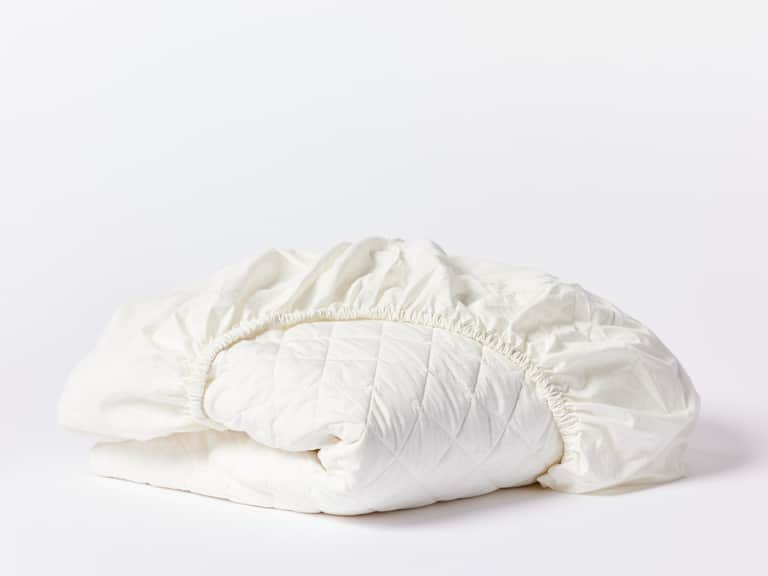
Use only a properly sized fitted sheet. If you are considering a waterproof protector, pad, or cover, confirm that the manufacturer of the crib mattress permits that exact type of accessory and that it does not make the sleep surface loose, padded, or poorly fitted. A generic mattress pad is not automatically appropriate for a crib, even if it is described as organic or breathable. Avoid adding a topper to soften, cushion, or change the feel of the mattress.
Keep the product’s manual, model details, purchase information, and any certification documentation together. Check the mattress regularly for tears, exposed filling, sagging, moisture damage, or other changes that could affect its condition. If it is damaged or no longer fits securely, contact the manufacturer for advice about whether it should be replaced. A tidy, minimal sleep surface is easier to inspect and maintain than one layered with accessories.
When washing bedding, use the temperature and detergent guidance on the care label, and make sure the fitted sheet is fully dry before placing it back on the mattress. Good routine hygiene does not require perfume, fabric softener, or antimicrobial treatments unless the manufacturer specifically recommends a compatible product. If a spill or illness raises a concern about cleaning, consult the product instructions rather than trying an untested method.
A calm, practical buying checklist
Rather than comparing products through a single headline claim, work through the details in order. This keeps the search grounded and helps distinguish genuine information from the atmosphere of premium branding.
- Confirm intended use. The exact model should be designed for infant sleep and for the type of crib in question.
- Check current safety information. Review applicable CPSC requirements, manufacturer documentation, and recall notices.
- Verify dimensions. Compare the mattress size with the crib’s instructions and confirm a snug fit without hazardous gaps.
- Prioritize a firm, flat surface. Do not choose plushness, an incline, or contouring as a substitute for the recommended infant sleep surface.
- Read the materials list. Find out what the core, cover, and other layers contain, and whether any claim covers the whole product or only selected components.
- Investigate certifications. Verify the standard, scope, certifier, and exact product covered. Treat organic, emissions, and safety claims as distinct.
- Review care requirements. Choose a model whose cleaning instructions are clear and manageable, and avoid unapproved accessories or treatments.
- Keep the sleep space simple. Plan for a fitted sheet and an otherwise clear crib, following current safe-sleep recommendations.
Price, appearance, and sustainability preferences may matter to a household, but none should displace these checks. A higher price does not guarantee a better fit or a safer surface. Nor does a minimalist color palette, natural scent, or luxurious fabric tell you whether a product meets the requirements for infant sleep.
Common questions about organic crib mattresses
Does organic automatically mean safer?
No. Organic describes a material or production claim under a particular standard; it does not automatically establish that the mattress meets every applicable infant sleep safety requirement. Check safety compliance, fit, firmness, and intended use separately.
Does a certification guarantee that every component is organic?
Not necessarily. Certification scope varies. A certificate may cover a particular fiber, component, or defined supply chain rather than every part of the finished mattress. Ask which exact materials are covered and verify the documentation.
Can I add an organic mattress pad or topper?
Do not assume that an accessory is suitable just because it is organic, washable, or marketed for comfort. Infant safe-sleep guidance favors a firm, flat surface with a fitted sheet and no loose or soft bedding. Use only accessories specifically permitted by the mattress and crib manufacturers, and do not add a topper to soften the surface.
Is a new mattress always necessary?
Not every family’s circumstances are the same, but a mattress should be identifiable, in good condition, appropriate for the crib, and a secure fit. For a used product, verify its history and model, inspect for damage, and check recall information and current requirements. If you cannot establish its condition or fit, consult the manufacturer or choose a product with a known history.
Should I choose foam, innerspring, or latex?
There is no material category that replaces the basic criteria. Compare documented construction, correct dimensions, intended infant use, safety information, cleaning requirements, and verified claims. Select a model that fits the crib and presents a firm, flat surface, rather than relying on an adult comfort preference.
The considered choice
An organic crib mattress can reflect a family’s priorities around materials and sourcing. The most useful choice, however, is not made by a label alone. It comes from examining what the mattress is made of, understanding what its certifications actually cover, confirming that it is designed for infant sleep, and ensuring it fits the crib securely.
Keep the order of importance clear: current safe-sleep guidance first, a firm and flat surface and secure fit next, then material preferences and care details. The quietest, most thoughtful nursery is not the one with the most layers. It is the one arranged with care, where each item has a purpose and the sleep space remains simple.
For current recommendations, consult the American Academy of Pediatrics, the U.S. Consumer Product Safety Commission, the crib and mattress manufacturers, and your child’s health professional. Guidance and regulations can change, and an individual infant’s medical needs may call for specific clinical advice.